















Why Both Matter for Hydration & Performance
Most endurance athletes know they need to hydrate.
Fewer understand what they actually need to replace.
To do that well, it helps to understand three related but different measurements:
- Sweat rate: how much fluid you lose over time, typically measured in liters per hour (L/hr)
- Sweat sodium concentration: how much sodium is in your sweat, measured in milligrams per liter (mg/L)
- Sodium loss rate: how much sodium you lose over time, measured in milligrams per hour (mg/hr)
Your sweat rate and sweat sodium concentration are independent variables. You can sweat a lot without having especially salty sweat, or have very salty sweat without producing a huge volume of it.
Put the two together and you can estimate your sodium loss rate:
Sweat rate (L/hr) × sweat sodium concentration (mg/L) = sodium loss rate (mg/hr)
Understanding the difference helps you build a hydration strategy around what you actually lose rather than relying on a generic number.
Do You Really Need to Calculate Your Sweat Rate?
Short answer: sometimes.
Longer, more useful answer: it depends on what you’re trying to solve …And sometimes only because you love a good spreadsheet and we respect that.
Sweat rate is contextual. It changes with temperature, humidity, the average exercise intensity, the intensity distribution (time in zone), and the wildly complex meat suit you showed up in that day. Yes, even if “nothing changed.” Something changed. Knowing your sweat rate helps with planning—how many bottles to bring, how much fluid to mix, or what to expect on race day in a specific environment.
When it comes to how much to drink during exercise, we still come back to one core principle:
Drink to thirst. Don’t force fluid.
So before diving into calculators, it helps to understand how sweat rate fits into a smart hydration strategy and where it doesn’t.
Two Ideas for Better Hydration
1. Sweat rate is a planning tool
Calculating sweat rate across different conditions (cold, moderate, hot) helps build a personal model of hydration needs. This works well for:
-
Not running out of bottles
-
Not carrying eight bottles “just in case”
-
Not panicking on race morning
Think logistics. Not dogma.
2. Thirst is the boss
Your body already has a hydration system. It’s called thirst. It has been in beta testing for a few hundred thousand years and generally works pretty well.
If you finish workouts dehydrated despite drinking to thirst, the fix is usually not “drink more water.”
It’s sodium.
(We’ll get there.)
These two ideas work together, but they do different jobs. Mixing them up is how people end up overhydrated, under-fueled, and deeply confused.
How to Calculate Your Sweat Rate (If You Want To)
If the goal is planning—“How much fluid am I likely to use in these conditions?”—this method provides a useful estimate.
What you’ll need
-
A scale
-
A normal training session
-
A way to track fluid intake
Step-by-step
-
Weigh yourself before exercise
Use kilograms if possible. Wear as little clothing as possible—or weigh nude. -
Record how much you drink during the workout
Measure fluid in grams (or convert later). -
Weigh yourself after exercise
Same clothing (or nude), same scale. -
Do the math
Sweat rate (liters per hour):
[(pre exercise weight in kg - post exercise weight kg) + (Fluid consumed in g / 1000)] / Time in hours
Helpful conversions
-
1 gram = 1 milliliter
-
1 kilogram = 1 liter
-
1 liter ≈ 33.8 oz
-
1 pound = 16 oz
That’s it. This gives an estimate of hourly fluid loss in those specific conditions.
Please Don’t Do This Once and Call It Science
If you’re going to measure sweat rate, measure the context too.
Write down:
-
Temperature and humidity
-
Sun vs. clouds
-
How hot or cold you felt
-
How hard and how long you went
One sweat rate from one day is not “your sweat rate.”
It’s a moment in time. Collect a few and patterns will start to show up. That’s the useful part.
Do You Actually Need to Know Your Sweat Rate?
Not always.
If drinking to thirst during training or racing, the more important question becomes:
Does exercise end with meaningful dehydration?
That’s something a scale can answer without calculating sweat rate.
The Simple Dehydration Check (No Calculator Required)
If the goal is dialing in hydration by thirst, the math gets simpler.
How it works
-
Weigh yourself before exercise
-
Weigh yourself after exercise
-
Do the math: (post-exercise weight / pre-exercise weight) x 100
How to interpret the result
-
Within 3% of starting body weight
You’re within range, maybe room for improvement. -
More than 3% dehydrated
Increase sodium incrementally next workout and see if it drives thirst and lessens dehydration. Do this until you are consistently within 3% dehydration. A good goal is to be between 0 to 2% dehydration.
Why Sodium Matters More Than Forcing Fluid
If drinking to thirst still results in dehydration, the fix usually isn’t drinking more water. It’s taking in more sodium. More specifically, it’s about replacing the sodium you lose in your sweat - a variable that can vary greatly between individuals.
In theory, when you replace the sodium you lose in your sweat, your thirst mechanism will urge you to replace the water you lose in your sweat since one of the drivers of thirst is maintaining a constant concentration of sodium in your blood. That is, if the concentration of sodium in your blood increases, you get thirsty. But, if the concentration of sodium in your blood decreases (hyponatremia), it can be difficult for your body to function properly as the sodium concentration is critical to normal cell signaling and the transmission of electrical impulses throughout the body. Thus, your body is always trying to protect your blood sodium concentration from dropping with a combination of thirst drive and kidney regulation.
Said differently, your thirst keeps you from over drinking if there isn’t enough sodium in your body, which means that you won’t drink all the water you lose in your sweat if you don’t also replace all the sodium you lose in your sweat. Take this theory and see if it works for you in practice. Take the time to do the me-search and remember to let thirst drive your drinking and to let sodium drive your thirst.
Putting It Together: Matching Fluid + Sodium
Once you understand your sweat rate and sweat sodium concentration, you have a better picture of both your fluid and sodium losses.
Below are common scenarios with clear intake ranges—not rigid rules, just starting points.
Low Sweat Rate (<0.8 L/hr) + Low Sweat Sodium Concentration (<800 mg/L)
Think: cool conditions, shorter efforts, lighter sweaters
-
Fluid: 400–600 mL/hr (14–20 oz)
-
Suggested sodium intake: 250–500 mg/hr
Skratch strategy
-
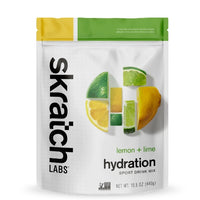
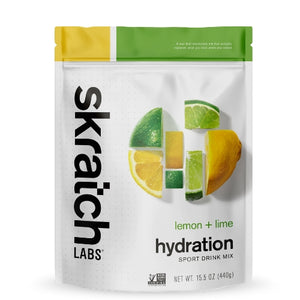
Use Sport Hydration Drink Mix at normal strength
-
Sip consistently rather than forcing fluid
High Sweat Rate (1.2–1.5 L/hr) + Low Sweat Sodium Concentration (<800 mg/L)
Think: heavy sweater, but not very salty
-
Fluid: 750–1,200 mL/hr (25–40 oz)
-
Suggested sodium intake: 300–600 mg/hr
Skratch strategy
-
Prioritize fluid volume
-
Avoid stacking extra electrolytes unless symptoms show up
Low Sweat Rate (<0.8 L/hr) + High Sweat Sodium Concentration (>1,000 mg/L)
Think: salty sweater who doesn’t lose a ton of fluid
-
Fluid: 500–800 mL/hr (17–27 oz)
-
Suggested sodium intake: 800–1,500 mg/hr
Skratch strategy
-
Increase sodium concentration, not just fluid
-
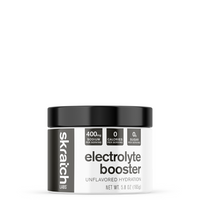
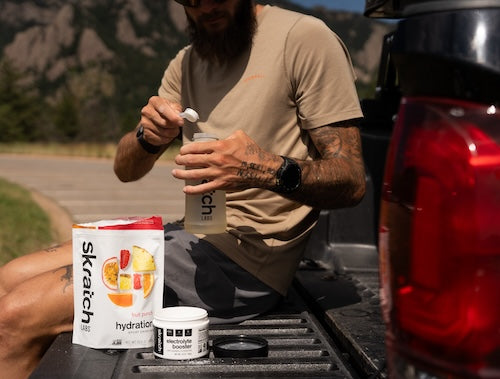
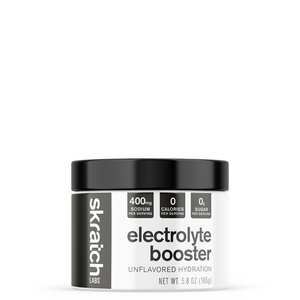
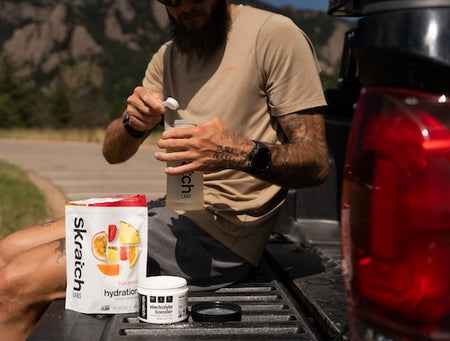
Combine Sport Hydration Drink Mix with Electrolyte Booster as needed
-
Especially important in long races or hot conditions
High Sweat Rate (1.2–1.5 L/hr) + High Sweat Sodium Concentration (>1,000 mg/L)
Think: hot races, long days, “salt crust” athletes
-
Fluid: 1,000–1,500 mL/hr (34–50 oz)
-
Suggested sodium intake: 1,000–2,000 mg/hr
Skratch strategy
-
Use Sport Hydration Drink Mix as your base
-
Add Electrolyte Booster to hit sodium targets without over-sweetening
-
Break intake into frequent, smaller sips to protect your gut
4. When & How to Use Skratch Hydration Products
Before Long or Hot Efforts
-
Start topped off, not behind
-
Light pre-loading with Hydration Drink Mixes can help stabilize fluid balance without bloating
During Exercise
-
Match intake to your individual fluid and sodium losses, not a generic number
-
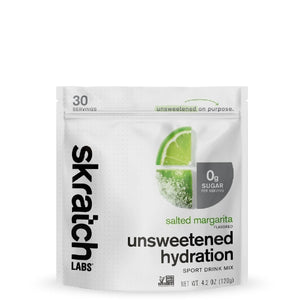
Use Skratch Sport Hydration Drink Mix or Unsweetened Sport Drink Mix for most sessions
-
Layer in Electrolyte Booster when sodium needs exceed what a standard bottle provides
After
-
Rehydrate gradually
-
Replace remaining fluid losses and sodium over the next few hours, Skratch Recovery Mix has a ratio to support this.
-
Snack on some salty foods
Questions? Our team is always happy to help you dial it in: info@skratchlabs.com
Because hydration isn’t complicated—just personal. 💧
